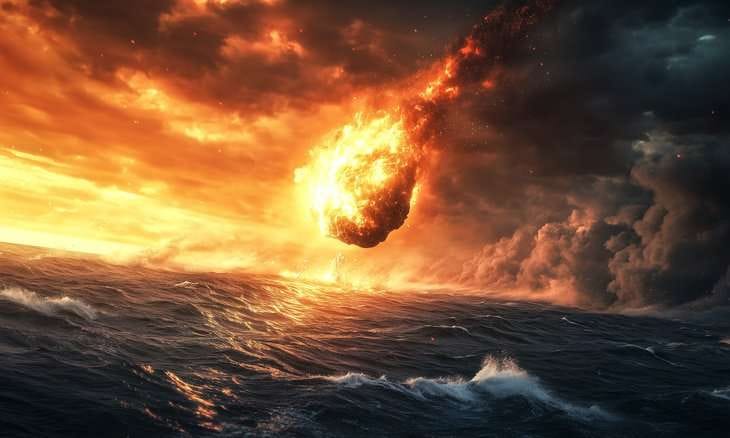
The Stars Falling From Above
The phrase “falling stars” evokes both wonder and mystery. In Scripture and in the natural world, it carries rich layers of meaning—both literal and symbolic. Let’s explore both the physical phenomenon and the biblical significance of “falling stars,” grounding our understanding in the truth of God’s Word.
Falling Stars in Nature: A Glimpse of God’s Glory
In the natural world, what we often call “falling stars” are meteors—small pieces of debris from space that burn up as they enter Earth’s atmosphere. One of the most spectacular displays of this is the Perseid meteor shower, which occurs every August. As Hugh Ross, Ph.D., describes in “The Dazzling Perseids: Creation’s Summer Blockbuster”:
“These meteors fly by at a much faster rate and from a single region of the sky, the vicinity of the Perseus constellation… a night under falling stars.”
This awe-inspiring event reminds us of the majesty of creation and the Creator behind it. (Psalm 19:1) declares:
“The heavens declare the glory of God, and the sky above proclaims his handiwork.” (Psalm 19:1).
The beauty of the night sky, including meteor showers, is not random—it is a testimony to the order, power, and artistry of the One who made all things.
Falling Stars in Scripture: Symbols of Judgment and Spiritual Realities
In the Bible, “falling stars” are often used symbolically to represent divine judgment, cosmic upheaval, or the fall of angelic beings. For example:
“The stars of the sky fell to the earth as the fig tree sheds its winter fruit when shaken by a gale.” (Revelation 6:13).
This passage is part of a vision of the end times, where cosmic signs accompany God’s judgment. The imagery echoes (Isaiah 34:4):
“All the host of heaven shall rot away, and the skies roll up like a scroll. All their host shall fall, as leaves fall from the vine, like leaves falling from the fig tree.” (Isaiah 34:4)
This is not merely poetic language—it reflects the moral and spiritual collapse of earthly powers and even angelic beings under God’s judgment. In Revelation, stars often symbolize angels (cf. Revelation 1:20), and their falling can represent the fall of rebellious spiritual beings.
The book of Jude also speaks of fallen angels:
“And the angels who did not stay within their own position of authority, but left their proper dwelling, he has kept in eternal chains under gloomy darkness until the judgment of the great day.” (Jude 1:6).
This aligns with ancient Jewish interpretations, such as those found in 1 Enoch, where stars are equated with angelic beings who rebelled against God.
A Call to Awe and Repentance
Whether we look up at a meteor shower or read of falling stars in prophecy, both point us to the sovereignty of God and the urgency of our response to Him. The heavens inspire awe, but they also remind us that this world is not eternal in its current form. Jesus said:
“Immediately after the tribulation of those days the sun will be darkened, and the moon will not give its light, and the stars will fall from heaven, and the powers of the heavens will be shaken.” (Matthew 24:29).
This is a call to readiness. The signs in the heavens are not just natural wonders—they are reminders that history is moving toward a divine conclusion. God will judge sin, but He also offers mercy to all who repent and believe in Christ (John 3:16; Romans 10:9).
Look Up with Wonder and Wisdom
When you see a falling star, let it stir your heart. Let it remind you of the Creator’s glory, the reality of spiritual warfare, and the certainty of God’s final judgment. But above all, let it lead you to the hope found in Jesus Christ, who holds the stars in His hand (Revelation 1:16) and offers eternal life to all who trust in Him.
“Lift up your eyes on high and see: who created these? He who brings out their host by number, calling them all by name…” (Isaiah 40:26).
Let us not only marvel at the heavens, but also worship the One who made them.
A Star Falling to the Earth
According to the Bible, a star is going to fall to the earth, and this event is described in (Revelation 8:10–11) and (Revelation 9:1–2). However, it is important to understand that the term “star” in these passages is often symbolic and not necessarily referring to a literal burning sun-like star, which would obliterate the earth if it physically collided with it. Instead, the Bible uses the term “star” to describe heavenly beings, celestial phenomena, or divine judgments. Let’s examine this in detail.
A Star Called Wormwood – Revelation 8:10–11
“The third angel blew his trumpet, and a great star fell from heaven, blazing like a torch, and it fell on a third of the rivers and on the springs of water. The name of the star is Wormwood. A third of the waters became wormwood, and many people died from the water, because it had been made bitter.(Revelation 8:10–11).
Explanation:
This passage is part of the seven trumpet judgments in the book of Revelation.
The “great star” falls from heaven and contaminates a third of the earth’s fresh water supply.
The name “Wormwood”refers to a bitter plant (Artemisia), symbolizing judgment and sorrow (cf. Jeremiah 9:15; Lamentations 3:15).
The star is described as “blazing like a torch,” suggesting a fiery or meteor-like appearance.
Many scholars interpret this as a symbolic representation of divine judgment, possibly through a natural disaster like a meteor or comet, or even a supernatural event.
The Star with the Key to the Abyss – Revelation 9:1–2
“And the fifth angel blew his trumpet, and I saw a star fallen from heaven to earth, and he was given the key to the shaft of the bottomless pit. He opened the shaft of the bottomless pit, and from the shaft rose smoke like the smoke of a great furnace…” (Revelation 9:1–2).
Explanation:
This “star” is not a literal celestial body but a personified being—note the use of the pronoun “he”.
This being is given authority to open the “bottomless pit” (Greek: abyssos), a place of demonic imprisonment (cf. Luke 8:31).
This aligns with the passage in (Luke 8:30–31), where demons beg Jesus not to send them into the abyss:
“Jesus then asked him, What is your name? And he said, ‘Legion,’ for many demons had entered him. And they begged him not to command them to depart into the abyss.” (Luke 8:30–31).
The “star” here is likely a fallen angel, possibly Satan or one of his subordinates, given temporary authority as part of God’s sovereign judgment.
Symbolism of Stars in Scripture
In apocalyptic literature like Revelation, stars often symbolize angels or spiritual beings:
“As for the mystery of the seven stars that you saw in my right hand… the seven stars are the angels of the seven churches…” (Revelation 1:20).
“His tail swept down a third of the stars of heaven and cast them to the earth.” (Revelation 12:4).
This last verse is often interpreted as referring to Satan’s rebellion, where a third of the angels (symbolized as stars) fell with him.
Will a Literal Star Fall to Earth?
From a scientific standpoint, a literal star (like our sun) falling to earth is impossible—our planet would be incinerated long before impact. The Bible, however, uses prophetic and symbolic language to communicate spiritual truths and future judgments. The “falling star” imagery in Revelation is best understood as:
A symbol of divine judgment (e.g., Wormwood poisoning waters),
A representation of a fallen angelic being (e.g., the star with the key to the abyss),
Or a celestial event that signals the end times (cf. Matthew 24:29).
“Immediately after the tribulation of those days the sun will be darkened, and the moon will not give its light, and the stars will fall from heaven, and the powers of the heavens will be shaken.” (Matthew 24:29).
This passage, spoken by Jesus, uses cosmic imagery to describe the cataclysmic events surrounding His second coming. The “falling stars” here may refer to meteor showers, angelic judgments, or symbolic representations of collapsing earthly powers.
What Does This Mean for Us?
These passages are not just about cosmic events—they are warnings and calls to repentance. The judgments described in Revelation are God’s response to persistent sin and rebellion. Yet, He offers mercy to all who turn to Him:
“The Lord is not slow to fulfill his promise… but is patient toward you, not wishing that any should perish, but that all should reach repentance.” (2 Peter 3:9).
In Summary
Yes, the Bible says a “star” will fall to earth (Revelation 8:10–11; 9:1–2).
These stars are likely symbolic—representing divine judgment, angelic beings, or supernatural events.
The purpose of these prophecies is not to satisfy curiosity but to warn of coming judgment and call people to repentance and faith in Christ.
“Therefore, stay awake, for you do not know on what day your Lord is coming.” (Matthew 24:42).
Let us be watchful, humble, and ready.